
This country came into my life as one of those trips I never imagined taking, but ended up making and falling deeply in love with. As a digital nomad, it is one of those highly talked about destinations. You are in Europe, but everything is far more affordable than in other popular countries, the food is incredible, and the environment is remarkably safe. Additionally, this journey had a very practical purpose. It was during the pandemic, I urgently needed to get vaccinated, and this was the closest place where I could do so. Thus, the trip turned into a blend of exploration and discovering the unexpected.
I started in Bucharest, the capital, and came face to face with the majestic Piața Revoluției, where the equestrian statue of King Carol I stands firmly in front of the National Museum of Art. The echo of the revolution is still palpable there, the very place where in December 1989 thousands of people filled the streets demanding freedom and the end of the communist regime. Many gave their lives in the attempt. Today, the Memorial of Rebirth, created by the artist Alexandru Ghilduș, stands in the center of the square as a silent tribute to the courage that transformed an entire nation.
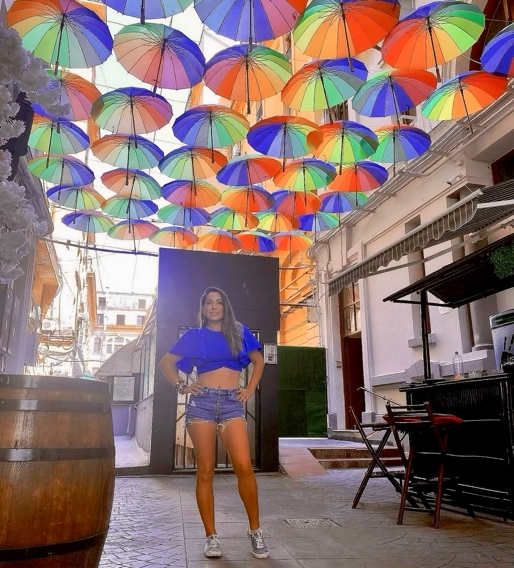
The capital feels strikingly European, filled with beautiful buildings that evoke the Belle Époque. However, if you walk a bit further, you begin to notice the stark contrast with the communist infrastructure, which, as we all know, is not exactly famous for its beauty. I soaked in plenty of art and sunshine since I arrived at the height of summer, a wonderful experience that I adored.
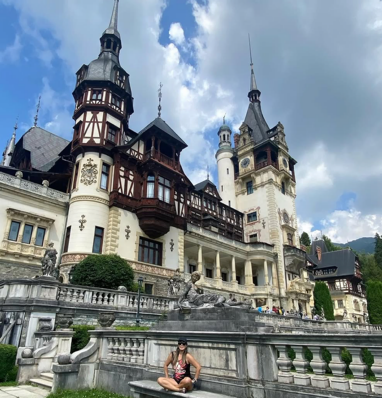
After fulfilling my purpose, my group of friends and I set off for Transylvania. I was so excited and ready to visit the famous “Count Dracula’s Castle.” Nostalgia took me back to my childhood days loving the animated series Count Duckula, where the opening line declared, “Many centuries ago, in Transylvania, a land wrapped in shadow… there lived a fierce and terrible dynasty of vampires, the Counts of Duckula!” So the prospect of finally standing in that legendary setting filled me with pure joy.
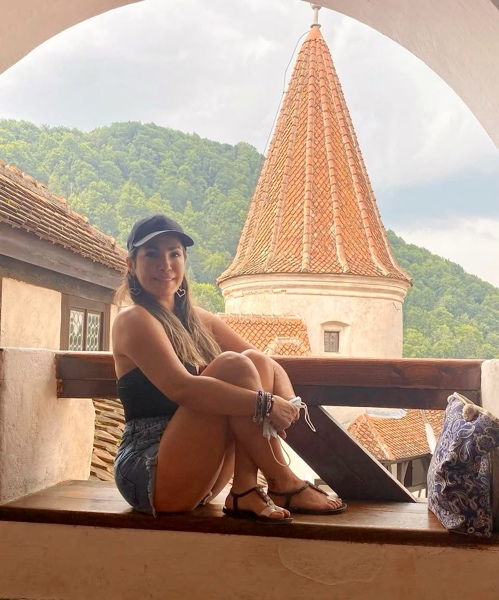
After a long journey toward a spectacularly green and serene landscape, completely different from Bucharest, I discovered the truth. The famous “Dracula’s Castle” isn’t even called that. Its real name is Bran Castle, named after the fortress and the municipality where it stands. Far from being a vampire’s lair, the property belonged to the royal family and served as the favorite residence of Queen Marie. What you see today is period furniture, jewelry, and glimpses of aristocratic noble life, nothing spooky or directly related to the novel. Across the region, the myth blends with the historical figure of Vlad III “The Impaler” (Vlad Țepeș), a Prince of Wallachia who used the family name Drăculea and was known for his brutal punishments. However, Vlad’s connection to Bran Castle was minimal. Some historians suggest he only passed through or was imprisoned there for a few days, but he never actually lived in Bran.
Even the Irish author Bram Stoker himself never set foot in the country. He imagined the setting using old maps and travel accounts to craft the fortress in his novel Dracula (1897). My mind drifted back to a previous trip to Whitby, England, where the shadow of the novel is felt in every corner, its dramatic cliffs, the ruins of the gothic abbey outlined against the sea, and that atmosphere of mystery enveloping its bookstores, tours, and cobbled streets. Everything there breathes legend. I expected some of that same dark magic here, but the reality was completely different. None of that eerie theatricality existed on the ground, so my initial surprise turned into an anecdote I now share with a smile. But for those arriving with those same expectations, don’t worry. A significant amount of investment is currently going into creating a massive theme park in honor of this fascinating literary figure.
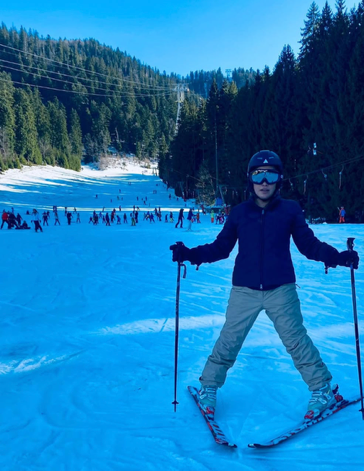
Months later I returned for what I affectionately call my “second dose” of travel, but this time in the dead of winter. I headed to Poiana Brașov, one of the premier ski resorts in the region. There, surrounded by the majesty of the Carpathian Mountains at the foot of the Postăvarul Massif, the landscape was simply breathtaking, completely white, blanketed in glistening snow, and the perfect setting for my first ski lesson. Between the freezing air, the adrenaline, and me desperately trying to execute the snowplow technique (better known as the “pizza” position, lol) to avoid tumbling down the slopes, I felt deeply alive and full of gratitude. Traveling is also about that, learning to adapt, overcoming your fears, and daring to step into the unknown. Without a doubt, it remains one of the best experiences of my life.
This trip gave me so much more than I expected. I met warm people, savored the local gastronomy, and discovered a fascinating land of contrasts, cities and mountains, legends and reality, history and rebirth. It is a destination I recommend from the heart, accessible, safe, and absolutely perfect for solo female travelers. It truly surprised me, and stayed with me forever.