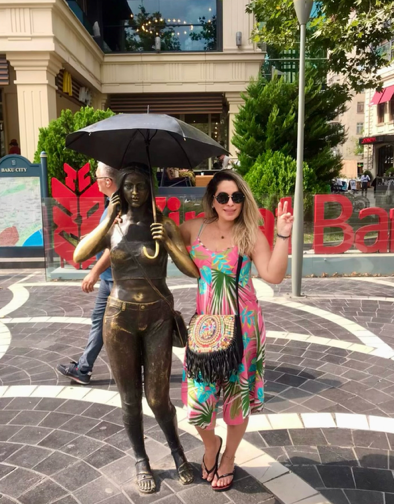

After Georgia, my plan was to cross the border by land into Azerbaijan. I was drawn to the idea of traveling slowly, watching the Caucasus landscape shift from one country to the next. But I traveled after the pandemic, and at that time the land borders were still closed. It was not possible to cross by bus as many travelers had done before. So I ended up flying.
The flight was short, just a little over an hour, yet the contrast was immediate.
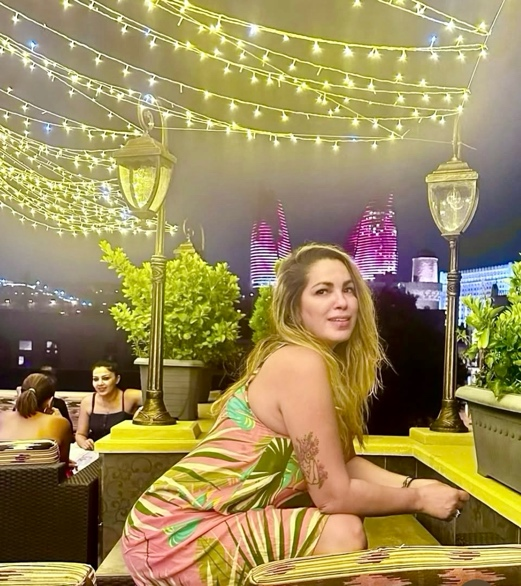
If Tbilisi felt artistic and textured, Baku felt ambitious and futuristic. Many call it the “Little Dubai” of the Caucasus, and standing in front of its skyline, I understood why. Wide boulevards, glossy architecture facing the Caspian Sea, buildings rising like flames toward the sky. Everything feels modern, constantly expanding.
And yet, behind that contemporary image lies the perfectly preserved medieval walled city of Icherisheher. Narrow stone streets, old balconies, traditional shops. Within minutes you move from glass and steel to quiet history. The Russian and Soviet legacy is visible in parts of the architecture, yet it coexists with a deeper Eastern identity.
One of the most memorable moments was escaping to the coast and spending the day at Sea Breeze Resort. About forty minutes from the city, the atmosphere shifts completely. A private beach, soft sand, the Caspian stretching endlessly toward the horizon, modern villas and elegant beach clubs. It felt refined yet relaxed, unexpectedly sophisticated for the region. There, I understood why Baku is often described as a city reinventing itself.
Standing in front of the Caspian Sea has something unique about it. Technically it is not a sea but the largest lake in the world, yet the feeling is entirely maritime. The breeze, the light, the endless horizon. Everything suggests openness.
Azerbaijan surprised me because of its constant duality. Medieval and futuristic. Traditional and ambitious. Soviet and ultra-contemporary. It does not try to be one single thing, and perhaps that is where its strength lies.
From the artistic sensitivity of Tbilisi to the polished energy of Baku, the Caucasus revealed itself as a region of powerful contrasts.
This journey was not just a change of country. It was an experience of identity, transition, and reinvention.