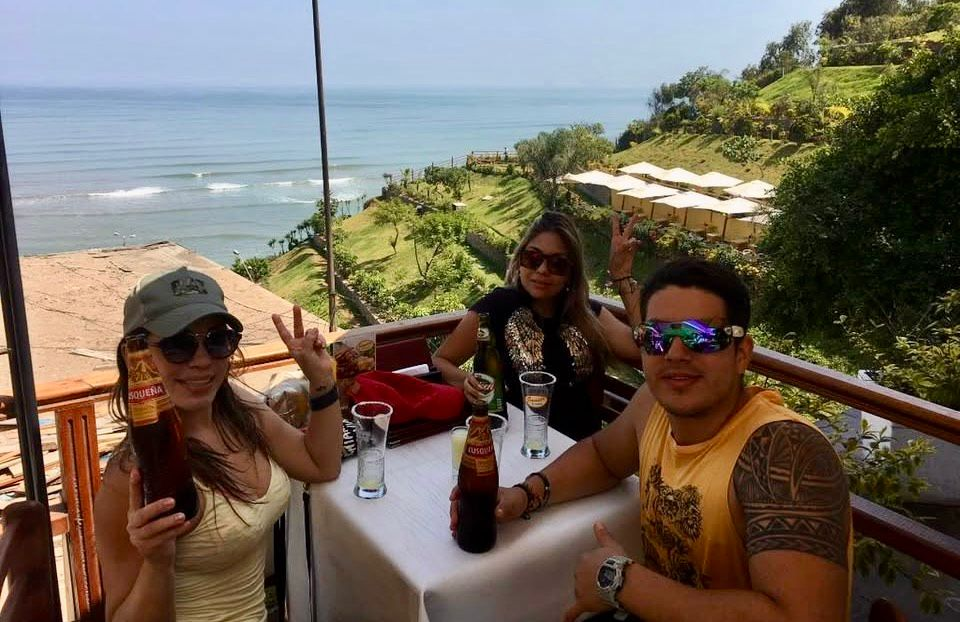

I remember my trip to Peru in a very special way. I traveled with my brother Alejandro and his wife Lau, and we had so much fun. Our journey began in Lima, a vibrant, intense city full of contrasts. From the very first moment, I was struck by the cliffs rising right in front of the sea and the unique way the city merges with the landscape. The Miraflores shopping center, perched right on the edge of the cliff, allows you to immerse yourself and lose your gaze in the ocean horizon, making you forget the urban chaos and blending seamlessly with the beauty of the place.
Next, we headed to Parque del Amor, that first pause where we truly began to feel the city. I remember it was cold, and the breeze from the Pacific Ocean felt freezing on the skin. The place is beautiful, adorned with a burst of yellow flowers and colorful ceramic mosaics featuring romantic quotes, all crowned by El Beso, the iconic, gigantic sculpture by Peruvian artist Víctor Delfín. The horizon from there is sublime, watching the sun slowly disappear into infinite skies over the sea.
Peru is a destination that breathes history on every corner. I would say it is like the Italy of South America, a walking open-air museum with an inexhaustible cultural richness where vestiges of all eras coexist. You can marvel at treasures like Caral, the oldest sacred city in the Americas, contemporary with the pyramids of Egypt; Chan Chan, the largest mud-brick city in Latin America and a monumental testament to the Chimú Kingdom before the Incas; the Inca walls upon which the colonial mansions of Cusco are built; or the ancient huacas integrated right into the heart of modern Lima. And that is to say nothing of its museums, which are simply next level. I was fascinated by the pre-Columbian collection, the gold and silver metalwork, and the exquisite, embroidered textiles of the Paracas culture, which retain their vivid colors intact thousands of years later, archaeological treasures that allow you to understand the greatness of the cultures that inhabited these lands.
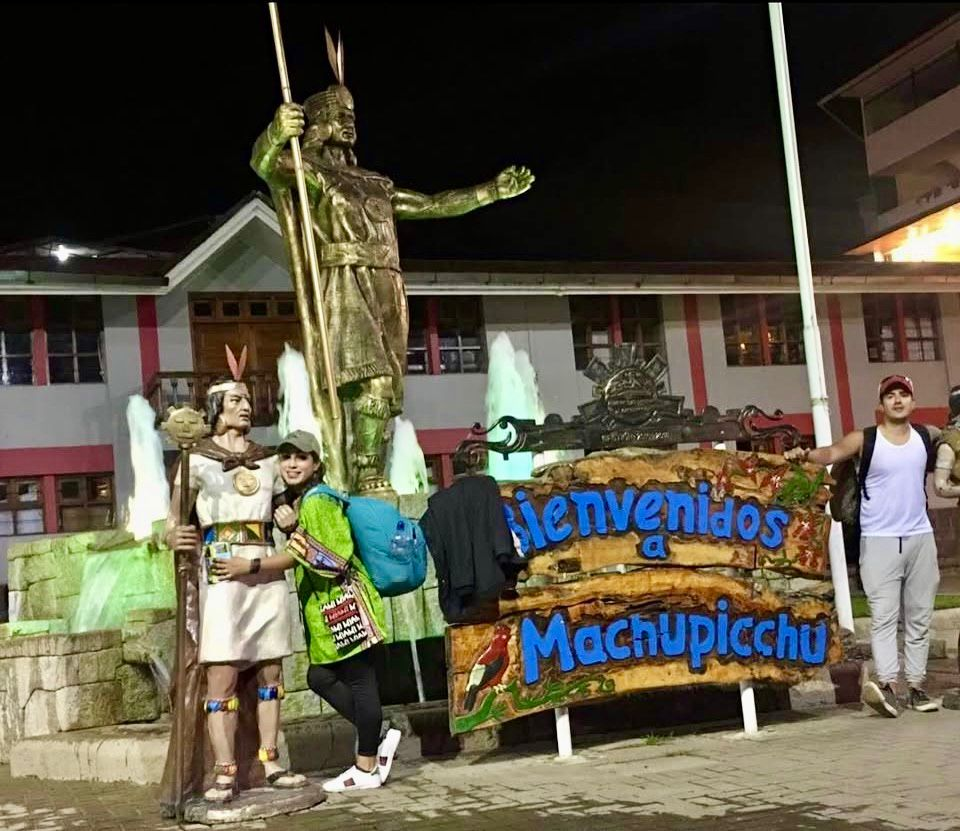
Then the road led us toward the majestic Andes. We were heading to Aguas Calientes, also known as Machu Picchu Pueblo. Although taking the train from Ollantaytambo is an option, we decided to make the journey on foot along the famous Hidroeléctrica route. That trek completely changed our adventure. We walked for several kilometers alongside the train tracks, surrounded by striking high-jungle scenery, towering mountains that seemed to touch the sky, and the constant rush of the Urubamba River accompanying every step. It was an intense and beautiful hike, a transformative landscape that instantly connects you with the sacred energy of the mountain.
Aguas Calientes, encircled by imposing peaks and shrouded in mist, possesses a sacred energy of deep spiritual reconnection with the earth and the Apus, the guardian spirits of the summits. That night, we arrived in the middle of Mother’s Day celebrations. Andean women danced in the streets wearing their wide polleras, ruanas, and long braids. Their traditional attire, which to the rest of the world might seem like a relic from another era, burst into life with vibrant colors and genuine laughter. It was a joy to watch them and catch their happiness as they shared beers and danced to the rhythm of the music. A truly unique sight. All around them, llamas and alpacas roamed freely through the town. It was not a show staged for tourists, but living culture breathing in perfect balance with the earth, a pure authenticity that can still be found in certain corners of Latin America.
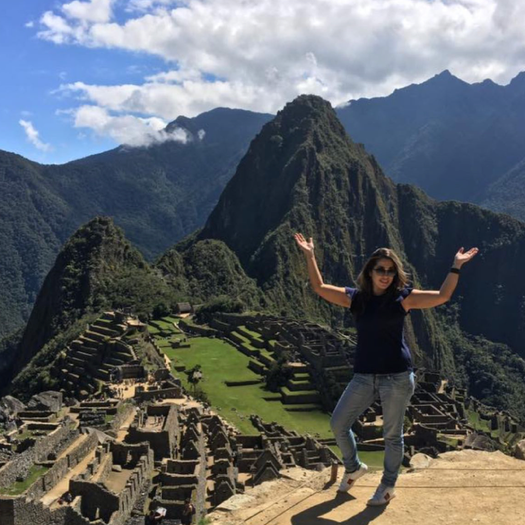
At dawn came the citadel of Machu Picchu. We woke up very early, but the excitement filled everything. Standing there and seeing it with your own eyes makes you feel profoundly alive, a truly special experience. It is not only one of the New Seven Wonders of the World and a UNESCO World Heritage Site, but a prodigy of human history. Built in the 15th century by the Incas at 2,430 meters above sea level, it sits nestled between the sacred peaks of Machu Picchu and Huayna Picchu, surrounded by the Urubamba River. It served as a religious, ceremonial, and royal sanctuary for the Inca Pachacutec, integrating its temples to align perfectly with the solstices and follow the rhythm of the stars, an architecture in absolute harmony with Pachamama.
It is astonishing to think they raised such a masterpiece without using the wheel, iron tools, or mortar, relying solely on precise techniques where the stones fit together perfectly to resist earthquakes, literally “dancing” during a quake without collapsing. Its advanced design features a subterranean drainage system that has prevented landslides through centuries of torrential rains, making it a true masterpiece of the engineering of its time.
And only because it remained hidden in the high jungle was it never found by the Spanish conquistadors, preserving its design intact until its academic rediscovery in the early 20th century. So today, we are left with the privilege of beholding, walking, and breathing this wonder with our own eyes. The landscapes were breathtaking, yes, but living this adventure alongside the people I love was the most meaningful part of this journey.