
China was one of those journeys that feels unlike any other. It is not a destination you visit lightly, nor one you fully process right away. It is a country that overwhelms, impresses, and forces you to look at history, human scale, and the future from a completely different perspective. From the very beginning, I felt I was entering an ancient civilization where past and present coexist without asking permission. Traveling through China meant confronting immensity, the human capacity to build, organize, and think in centuries rather than generations.
I arrived first in Beijing, a city that concentrates centuries of power, tradition, and symbolism. Visiting the Forbidden City was a deeply emotional experience. Walking along those walls, crossing courtyards and architectural axes where the fate of an entire civilization was once decided feels intense and very real. Knowing that the film The Last Emperorwas filmed there makes the experience even more powerful. You recognize the spaces, the frames, and quickly understand why so many people in China visit this place simply to take photos along those walls. It is highly photogenic, almost cinematic, and today unmistakably Instagram-worthy.
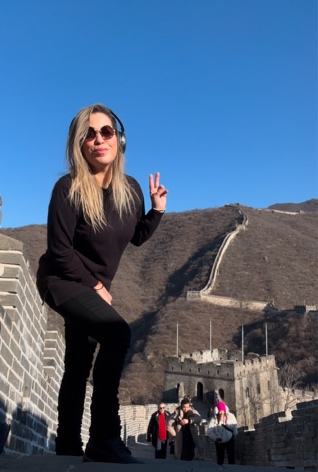
From Beijing, I traveled to Mutianyu, one of the most impressive and best-preserved sections of the Great Wall of China. I chose to stay there in a small local guesthouse, and the experience was truly magical. Waking up and seeing the Wall stretching across the mountains from my window is something words hardly capture. There is a special silence and a sense of vastness that completely surrounds you. Being there meant a great deal to me. The Great Wall is one of the New Seven Wonders of the World, and traveling to this point was the central purpose of my journey, as it marked the seventh and final one I wanted to complete. Standing there carried a deep personal meaning. The Wall began under the order of Qin Shi Huang and was expanded over centuries by different dynasties. Today, it stretches for more than 21,000 kilometers, crossing extraordinary landscapes, including the Yanshan mountain range. Walking along it is to truly understand the scale of what human beings can achieve when they think in centuries rather than lifetimes.
This journey followed China’s classic route, often referred to as the Golden Triangle of China, which connects Beijing, Xi’an, and Shanghai. In Xi’an, I visited the Terracotta Army, an experience that feels completely outside of time. Thousands of life-size figures, each one different, standing in silence for more than two thousand years.
Being there is confronting the idea of permanence, protection, and legacy in a profoundly moving way.
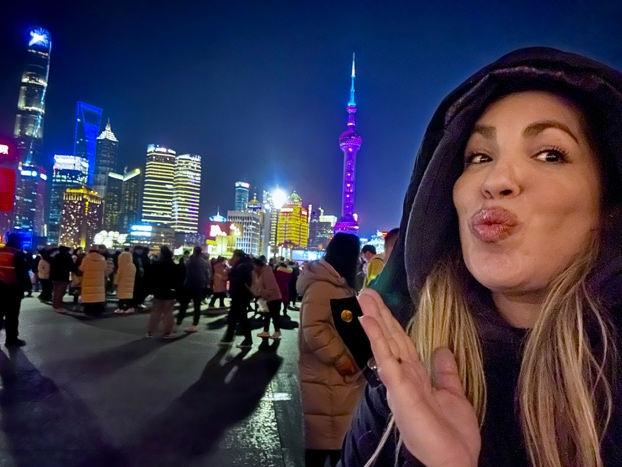
The final stop of the journey was Shanghai, a city that feels as if it comes from the future. Lights, skyscrapers, giant screens, and a pace that never slows down define its atmosphere. The contrast with Beijing is striking, yet both cities coexist as two sides of the same country. Here, technology is everywhere: hotels where deliveries arrive at your room via robots, restaurants run almost entirely by automated systems, and an efficiency that is truly impressive. China is, without a doubt, one of the most exotic and surprising destinations I have ever experienced. A country that confronts you with the deepest past and the most accelerated future, all within a single journey.