
India is intense.
You either love it or you hate it.
I chose to love it.
The first time I arrived in India, I crossed the border from Lumbini, Nepal, the birthplace of Siddhartha Gautama, the Buddha. From there, I entered a deeply spiritual region known as the Dharamsala area, where the residence of the current Dalai Lama is located. It felt like a symbolic beginning. The landscape seemed taken from a fairytale: green mountains, monasteries, prayer flags moving with the wind, and a calm that felt both ancient and alive.
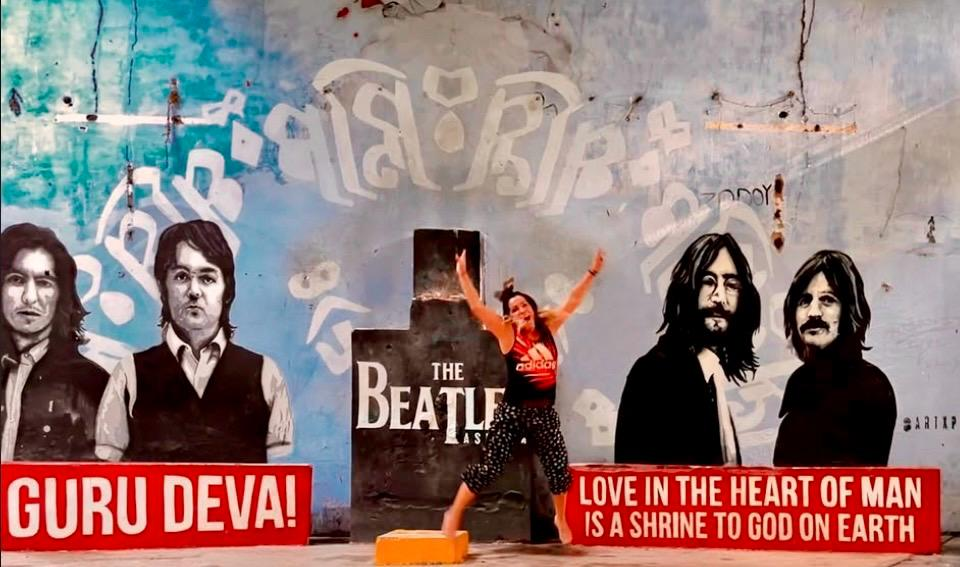
The second time, and in the occasions that followed, I stayed in Rishikesh, a small and welcoming town considered one of the most sacred places in the world. Known as the yoga capital of the world, Rishikesh attracts people from all corners of the planet who arrive in search of yoga and meditation retreats, mindfulness practices, holistic healing, and sound work with Tibetan bowls as tools for balance and inner transformation.
It is a place with no parties or alcohol, where meat is not sold and where life revolves entirely around spiritual practice. People come to Rishikesh to learn, to go deeper, and to observe the body and the mind from a different perspective. Meditation and yoga are part of daily life there, and experiencing life in ashrams hidden among the mountains of India is something not to be missed. Life is simple there. There are no major distractions, only nature, animals, and space to reconnect with yourself. You leave feeling full and deeply nourished.
That said, yoga retreats can be demanding for those of us who are not used to this rhythm. Yoga in the morning, yoga in the afternoon, and yoga in the evening. Practically all day long. By the third day, your entire body hurts. Absolutely everything. It is a challenging and comforting experience at the same time. You struggle, but you do so willingly, because you understand that you are training the body together with the mind, taking both to a place rarely explored in everyday life.
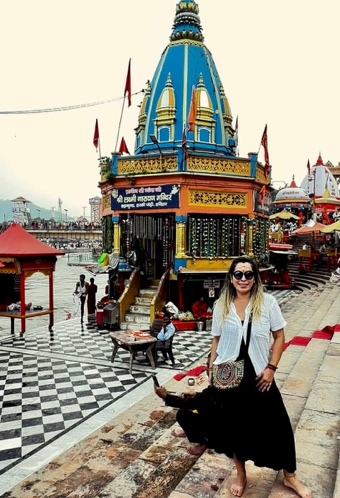
And then there is the Ganges and the goddess Ganga. One of the most important and sacred rituals in India is the Ganga Aarti, a daily ceremony of devotion and gratitude to the river and the goddess. Every afternoon, around five o’clock, the banks of the Ganges transform. Incense smoke rises, oil lamps reflect on the water, and the river seems to breathe. The mist rising from the surface creates an almost unreal atmosphere, as if the goddess herself were present. It is a hypnotic moment, one that feels both intimate and powerful, where you are never quite sure whether you are observing or being observed.
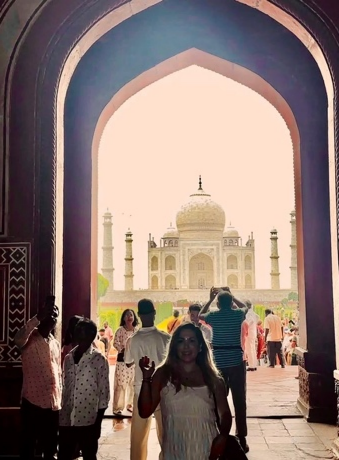
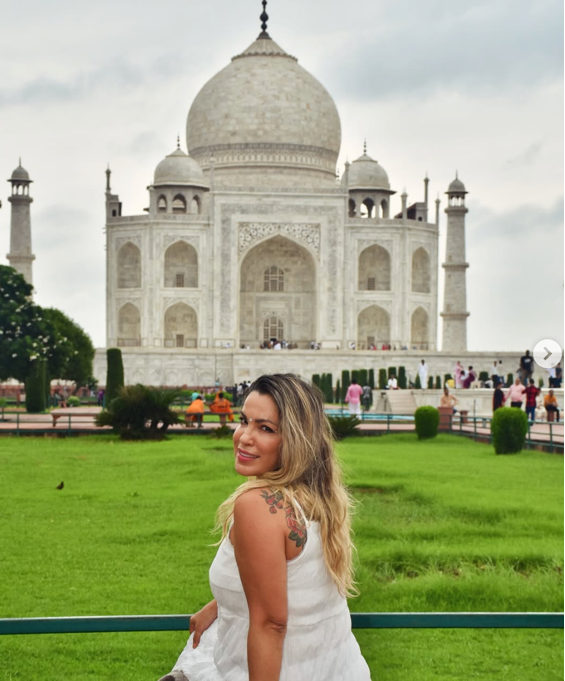
On another journey, I visited Agra, home to the Taj Mahal, one of the seven wonders of the world and one of the most impactful places I have ever seen. The city is small and quiet, but everything revolves around this architectural jewel. The Taj Mahal impresses not only because of its size or symmetry, but because of its details: the white marble that shifts in tone with the light of day and the delicate inlays of semi-precious stones crafted with extraordinary precision. Everything there feels majestic, silent, and timeless.
From Agra, I continued my journey to Delhi. Of all the intensity the capital offers, there is one place I want to highlight: the Gandhi Smriti. Being there was beautiful and painful at the same time. It is the place where Mahatma Gandhi was assassinated, where you can follow his final steps. Walking through that space feels quiet, heavy, and deeply human.
This visit coincided with the end of that journey, and everything suddenly made sense. Just as journeys end, so does life. Everything begins and everything ends. We are eternal souls moving through temporary experiences in the material world, as Hindu philosophy teaches.
India is not comfortable, but it is real.
It confronts you, shakes you, and if you allow it, it transforms you.
That is why, even though it is not a destination for everyone, for me it will always be a place I return to.
Again and again.